June 3, 2026
Installing artificial turf can transform your outdoor space, offering a low-maintenance and visually appealing alternative to natural grass. This process enhances the aesthetic appeal of your landscape and provides a sustainable choice that conserves water and reduces long-term maintenance costs. Whether you are a homeowner looking to upgrade your lawn or a sports facility manager designing a new field, understanding the installation journey is crucial. Preparing for each phase helps ensure a successful project that maximizes your investment and provides an enduring, vibrant surface for years to come.
Preparing and Planning for the Project
Conducting a thorough site assessment is the first step in ensuring a successful artificial turf installation. Evaluating the area helps identify specific challenges, such as drainage issues or uneven surfaces, allowing professionals to design a customized solution. Choosing the right type of artificial turf is equally pivotal, as it must match your functional requirements and aesthetic preferences. For example, sports fields require maximum durability, while residential lawns prioritize a natural feel underfoot. Gathering essential tools like cutting instruments, joining pegs, adhesive tape, and a mechanical compactor ahead of time prevents project interruptions.
Budgeting effectively is essential to managing costs and resources throughout the life of the installation. It is wise to obtain detailed quotes from multiple suppliers and factor in initial material expenses, labor, and future maintenance supplies. Scheduling requires strategic coordination around weather, labor, and equipment availability, as base preparation and turf laying demand dry conditions for optimal execution. Proper timing maximizes the durability and performance of the synthetic grass. According to Sports Venue Calculator, an artificial turf field project typically takes three to six months, making early planning essential to stay within your desired timeframe.
A strategic approach to every detail, from site evaluation to tool acquisition, helps streamline the process and ensures a seamless transformation. By addressing potential obstacles and aligning project goals with available resources, you position your landscape to enjoy the benefits of synthetic grass for a long time. Structured planning simplifies the workflow, minimizes unforeseen delays, and enhances the overall sustainability and visual impact of your outdoor space.
Clearing and Preparing the Ground
The first step in ground preparation is removing existing vegetation, providing a clear canvas for the artificial turf installation. Clearing involves using sod cutters, shovels, or treatments to eradicate grass, weeds, and organic material at the root level. Excavation follows, digging down to the necessary depth to accommodate the sub-base and base layers while eliminating hidden rocks or debris. After excavation, mechanical compactors press down the soil particles to eliminate air pockets, creating a solid foundation that prevents the lawn from settling unevenly over time.
Installing a weed barrier is crucial to prevent unwanted plant growth from disrupting the final layout. A high-quality geotextile weed barrier acts as a protective layer beneath the turf, inhibiting root penetration and reducing future maintenance. Effective drainage design is also integrated at this stage, incorporating appropriate slopes and permeable substrates to facilitate water movement. Designing optimal drainage allows water to flow freely away from the surface, preventing waterlogging, mold growth, and unpleasant odors during heavy rainfall or irrigation.
Addressing vegetation removal, excavation, soil compaction, and drainage as a holistic process ensures the optimal performance of the final layout. Careful implementation of each component in this phase minimizes future surface defects like wrinkles or sinking. Investing adequate effort into clearing and preparing the ground sets the stage for a smooth, high-quality installation that looks pristine throughout its lifespan.
Constructing a Stable Base
Constructing a robust base layer is instrumental in achieving a strong foundation for the artificial turf. Materials such as crushed stone, decomposed granite, and gravel are spread uniformly to offer structural stability and excellent drainage capabilities. This base acts as a protective, load-bearing layer that cushions the turf while facilitating rapid water flow away from the surface. Introducing a reliable base layer ensures the synthetic blades can withstand heavy foot traffic and changing environmental conditions without shifting.
Leveling the surface during base construction is a critical step in achieving a seamless and visually beautiful turf surface. Using grading tools and straightedges, installers level the crushed stone to eliminate any lumps, dips, or uneven spots before the turf is rolled out. Once leveled, a vibratory plate compactor condenses the loose aggregate materials into a rock-solid, densely settled structure. Thorough compaction prevents future shifting and displacement, maintaining the flat profile and long-term utility of the entire installation area.
Conducting a comprehensive base layer inspection serves as the final quality check before the synthetic grass is introduced. This evaluation confirms that the compaction, grading, and slope alignment perfectly meet predetermined technical specifications. Paying close attention to detail during this inspection mitigates potential surface flaws and enables seamless turf placement. Building a precise base ensures a resilient, enduring foundation that preserves the aesthetic value of your landscape under heavy wear and tear.
Laying and Securing the Turf
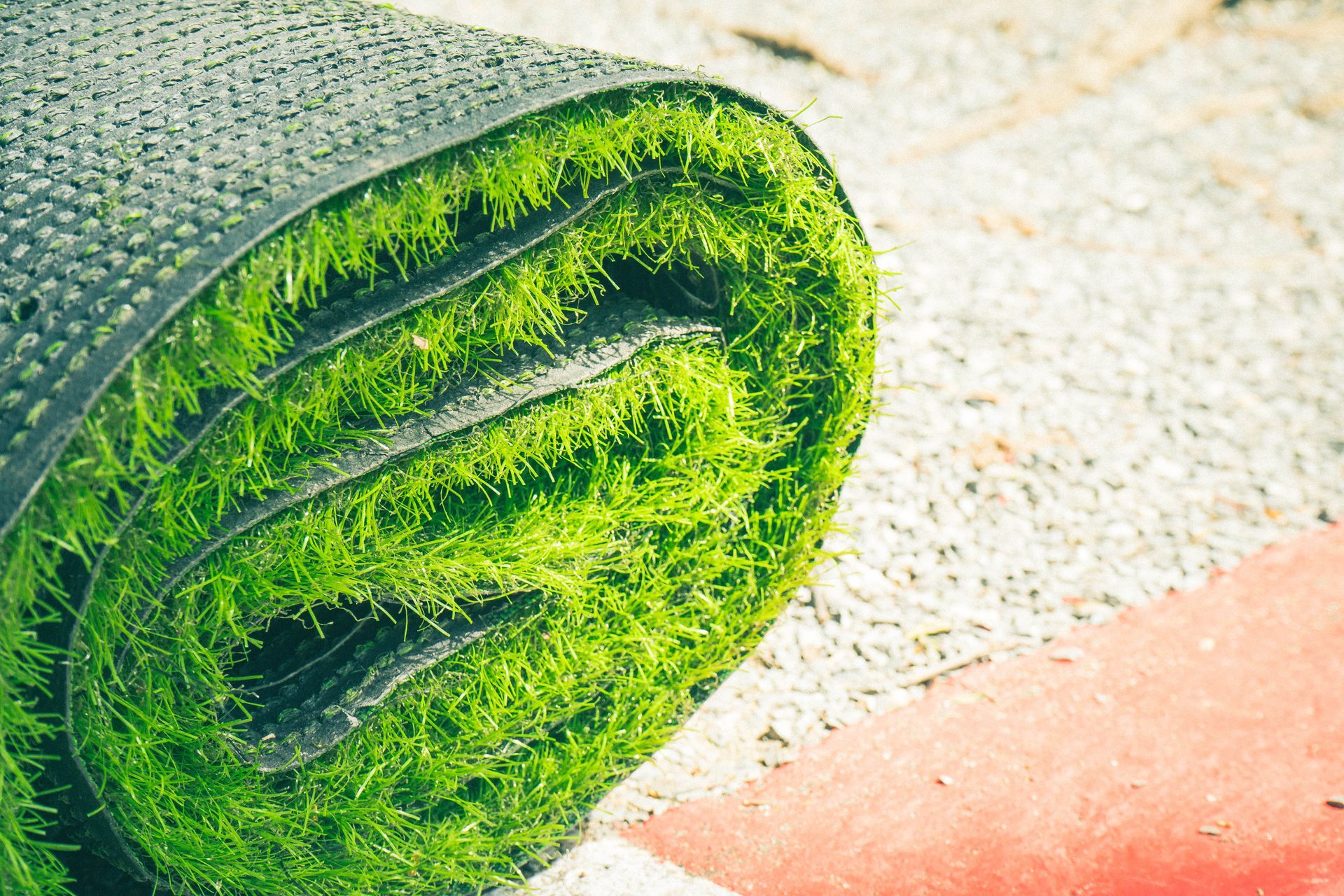
The artificial turf installation phase begins by unrolling and laying out the synthetic turf rolls strategically across the prepared base. The backing must be allowed to acclimate to the sun, which relaxes the fibers and eliminates wrinkles that can arise during transit. Installers position the turf carefully, ensuring that the blade direction faces the main viewing angle for the most natural appearance. Fitting the turf involves meticulous measurement and precision trimming around obstacles like pathways, trees, and landscape borders to achieve a clean, professional fit.
Seamming multiple pieces together is required for larger areas to create a continuous, authentic-looking grass surface without visible lines. Installers align the adjacent edges perfectly, utilizing heavy-duty seam tape and specialized outdoor adhesive to bond the segments together securely. Once the seams are joined, the perimeter is anchored using non-corrosive landscape nails or staples. Properly spacing these anchors along the boundaries ensures the artificial turf lies flat, resists wind uplift, and eliminates tripping hazards caused by shifting edges.
Accurate seaming and trimming finalize the structural layout, turning the outdoor area into a low-maintenance, visually stunning asset. Utilizing professional alignment techniques optimizes both the longevity and prestige of the installation, offering enduring value over time. With each step executed for precision, the synthetic surface becomes an exemplary feature that enhances enjoyment and property value for both residential and commercial spaces.
Finishing With the Final Touches
Brushing up the turf after installation aligns the synthetic blades, giving the artificial turf a natural, upright presentation. Specialized power brooms brush against the grain to lift and straighten the flattened fibers, promoting uniform texture across the surface. This brushing process also helps evenly distribute infill materials, such as rounded silica sand or rubber granules, deep into the turf matrix. Infill acts as ballast to weigh down the system, protect the backing from UV degradation, and keep the individual grass blades standing erect.
Monitoring infill distribution across the turf guarantees sufficient coverage, which is vital for shock absorption and fiber stability in high-traffic zones. Installers complete a meticulous quality check to verify seam accuracy, check anchor points, and confirm the entire surface meets performance standards. A final customer walkthrough engages clients in reviewing the completed project, ensuring satisfaction with the layout and grading. This collaborative step allows professionals to answer maintenance questions and share tips for keeping the landscape beautiful.
Endowing the installation with final touch-ups reflects a dedication to excellence, anchoring the synthetic grass as a valued addition to your property. Routine post-installation care, such as periodic rinsing, removal of organic debris, and occasional cross-brushing, will maintain this pristine look. Safeguarding the perimeter and maintaining proper infill levels ensures your outdoor space remains highly functional and gorgeous for years to come. For more information about the services that we offer, reach out to our incredible team at RLTW Facility Services today!